


Skip to content

Application Security

Application security that's built in, not bolted on

Security shouldn't be a final checklist — it's the foundation. We bring a DevSecOps mindset to every project, with threat modeling, secure coding, automated scanning and manual review, so risks are caught before they reach production.

What you get

  • Fewer surprises in production. Vulnerabilities are found in development, where they're cheapest to fix.
  • Compliance with confidence. Technical controls mapped to PIPEDA, Law 25 and industry expectations.
  • Long-term partnership. Ongoing monitoring and patching instead of a one-off report that gathers dust.

(01) Overview

Part of our QA & Release Assurance capability.

Data is often your most valuable asset. We protect it with encryption, least-privilege access, secure authentication and continuous monitoring — and we design with Canadian privacy obligations in mind, including PIPEDA, Quebec's Law 25 and, for health information, provincial laws such as Ontario's PHIPA.

Already have an application in production, perhaps one built quickly with AI tools? We run security assessments that combine automated vulnerability scanning with manual review, then prioritize fixes by real business risk and help your team remediate them. It's a transparent, ongoing partnership: we monitor, patch and keep you ready for audits.

Is this the right service?

Choose application security when

  • You need to know how the software could be attacked or misused, and what to fix first
  • Customers, auditors or a partner are asking for security evidence
  • An application built quickly, by any team or tool, is about to handle real data

Consider instead

(02)Deliverables

What's included in application security.

  • 01

    Threat modeling & secure architecture

    Identify how your system could be attacked and design controls before code is written.

  • 02

    Secure code review

    Manual and automated review against OWASP guidance, with clear, prioritized findings.

  • 03

    Vulnerability assessments

    Automated scanning plus manual testing, and support for independent penetration tests.

  • 04

    Authentication & access control

    SSO, multi-factor authentication and role-based permissions done right.

  • 05

    Privacy engineering

    Privacy-by-default settings, consent flows, data minimization and breach-readiness for PIPEDA and Law 25.

  • 06

    Monitoring & incident readiness

    Logging, alerting and response playbooks so incidents are detected and contained fast.

(03)What a security finding looks like

Findings with evidence, not scanner noise.

An illustrative finding from a security review. Each one states the risk in business terms, shows how to reproduce it and is re-tested after the fix. The application and the finding are invented.

Illustrative example
Finding · Invoice records readable by other customersHigh risk: fix before release
What we found
  • Changing the invoice ID in a request returned another customer's invoice
  • The API checked that the user was signed in, not that the invoice was theirs
Why it matters
  • Personal and financial data exposed across customers
  • A reportable privacy incident if exploited
Fix
  • Authorize every record lookup against the signed-in account
  • Add an automated test that tries other customers' IDs
Verification
  • Re-tested after the fix
  • The new test runs in the pipeline, so the issue can't quietly return

(04)AI & responsibility

How AI assists security work.

Where AI helps

  • Scanning code and dependencies, and grouping related findings
  • Drafting threat models from architecture documents for review
  • Suggesting fixes for common vulnerability patterns
  • Summarizing logs during an incident investigation

What our experts own

  • Prioritizing findings by real business risk
  • Manual review and testing of critical paths
  • Approving every remediation change
  • Evidence for auditors and customers

(05)Our process

How we deliver application security.

  1. 01

    Assess

    Review architecture, code, infrastructure and data flows to find real risks.

  2. 02

    Prioritize

    Rank findings by likelihood and business impact — not by scanner noise.

  3. 03

    Remediate

    Fix issues with your team, or for you, with secure patterns that prevent repeats.

  4. 04

    Verify

    Re-test every fix and document the evidence for auditors and customers.

  5. 05

    Monitor

    Continuous scanning, dependency updates and alerting keep you protected.

(06)Connected capabilities

Connected work, one accountable team.

How the other capabilities support application security on a project.

How we build with AI

Choose how AI is used while we build.

Security reviews cover code built either way. If AI tools must not process your code at all, choose the private environment.

(07) Tools & technologies

  • OWASP ASVS
  • OWASP API Top 10
  • SAST / DAST
  • Dependency scanning
  • OAuth 2.0 / OIDC
  • MFA
  • Encryption at rest & in transit
  • Cloud security (AWS / GCP)

(08)Industries

Where this matters most.

(09)Proof

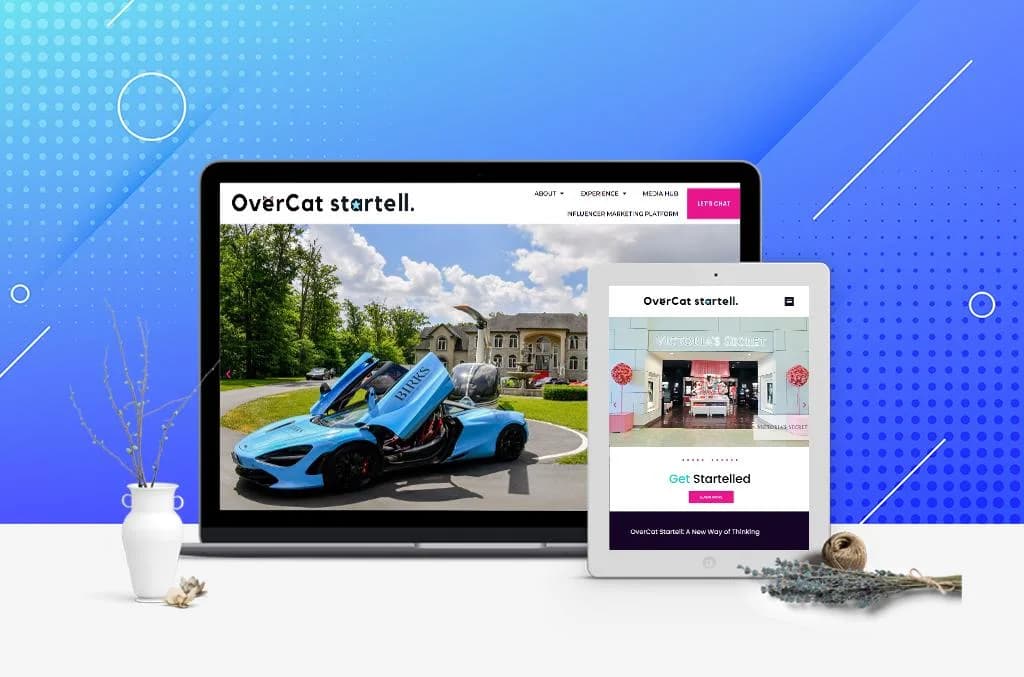
OverCat — project mock-up on desktop and mobile screens

OverCat· Media & Communications· Corporate website

OverCat: a Canadian PR company's website with a private media hub for suppliers

An English corporate website for OverCat, a PR company located in Canada — with a password-protected Media Hub where each supplier downloads its own images, campaign briefs, products and files.

  • Presents the company's services, with easy content uploads
  • Password-protected Media Hub with a separate area per supplier
  • Images, campaign briefs, products and files ready to download
Read the OverCat case study

(10)FAQ

Application Security: your questions.

What's the difference between vulnerability scanning and penetration testing?

Vulnerability scanning uses automated tools to find known weaknesses quickly and repeatedly. Penetration testing is a manual, goal-driven exercise where a tester chains weaknesses together the way a real attacker would. Most organizations need continuous scanning plus periodic penetration tests.

Can you help us comply with PIPEDA and Quebec's Law 25?

We implement the technical side: privacy-by-default settings, consent capture, access controls, encryption, audit logs, data retention and breach-detection capabilities. For legal interpretation, we work alongside your privacy counsel.

Can you assess an application another team built?

Yes. We regularly review codebases we didn't write. You receive a prioritized report with evidence and remediation guidance, and we can implement the fixes if you'd like.

Can you review code written with AI tools?

Yes, and it gets the same review as any other code: authentication and authorization, input handling, secrets, dependencies and data exposure. Code produced quickly, by people or tools, tends to cut corners in exactly those places.

What does DevSecOps mean in practice?

Security checks run automatically in the delivery pipeline — dependency and code scanning on every change, secrets detection, and security reviews on risky features — so security keeps pace with development instead of slowing it down.

(11)Insights

Next step

Let's talk about your application security project.

Tell us what you're building. We'll come back with practical next steps, a realistic plan and an honest estimate.