
A software idea can sound compelling in a boardroom and still fail the moment it meets a real workflow, budget, or security requirement. Learning how to validate software product ideas before committing to full development protects capital, shortens time to market, and gives product teams evidence they can act on. The goal is not to prove that everyone likes the idea. It is to determine whether a specific customer has a painful enough problem, a practical path to adoption, and a reason to pay.
Validation Is a Business Decision, Not a Popularity Contest
Early validation often goes wrong because teams ask the wrong question. “Would you use this?” produces polite answers. People routinely say yes to hypothetical products, then keep using spreadsheets, email threads, and legacy systems once it is time to change behavior.
A stronger question is: what are they doing today, what does that process cost, and what event would make them switch? For a healthcare operator, that might be manual patient intake creating compliance risk. For an e-commerce brand, it could be inventory data trapped across disconnected platforms. For a manufacturer, it may be delayed decisions caused by incomplete production data.
A validated idea has evidence in three areas: the problem is urgent, the proposed solution fits the user’s environment, and the business model can support delivery and growth. Missing any one of these does not always kill the product, but it changes the investment case.
How to Validate Software Product Ideas Before Development
Start with a clear assumption instead of a broad concept. “An AI-powered operations platform” is not testable. “Mid-sized distributors will pay to automate purchase-order exception handling because staff spend more than eight hours per week reconciling orders” is testable. It identifies a buyer, a workflow, a measurable cost, and a possible economic outcome.
Write down the assumptions that must be true for the product to work. Usually, these include the user’s pain level, willingness to change processes, access to required data, technical integration requirements, security constraints, buying authority, and willingness to pay. Rank them by risk. The assumptions most likely to invalidate the product should be tested first.
Interview for existing behavior
Customer interviews are the fastest way to expose weak assumptions, provided they focus on facts rather than opinions. Speak with people who match the intended user, buyer, and technical stakeholder profiles. In B2B software, those may be different people. An operations manager feels the problem, an IT leader evaluates risk, and a finance executive approves the purchase.
Ask participants to walk through the last time the problem occurred. Find out which tools they used, who was involved, where delays happened, what exceptions caused rework, and what the issue cost in time, revenue, risk, or customer experience. Request examples such as reports, forms, process maps, or anonymized screenshots when appropriate.
Avoid pitching too early. If a prospect has not described the pain in their own words, a product demo can create false confidence. Strong interview signals include a customer asking when they can try the solution, offering access to a pilot environment, or introducing you to the person who controls budget.
Test the value proposition before building features
Once the problem is clear, test whether the proposed outcome resonates. A concise landing page, clickable prototype, product walkthrough, or solution brief can be enough at this stage. The asset should describe the problem, the business result, the intended workflow, and a specific next step, such as booking a discovery session or joining a pilot.
Do not measure validation by page views alone. Measure qualified actions. If a landing page attracts thousands of visitors but no relevant decision-makers request a conversation, the messaging or market may be wrong. If ten target companies respond and several agree to discuss implementation requirements, that is far more meaningful than broad traffic.
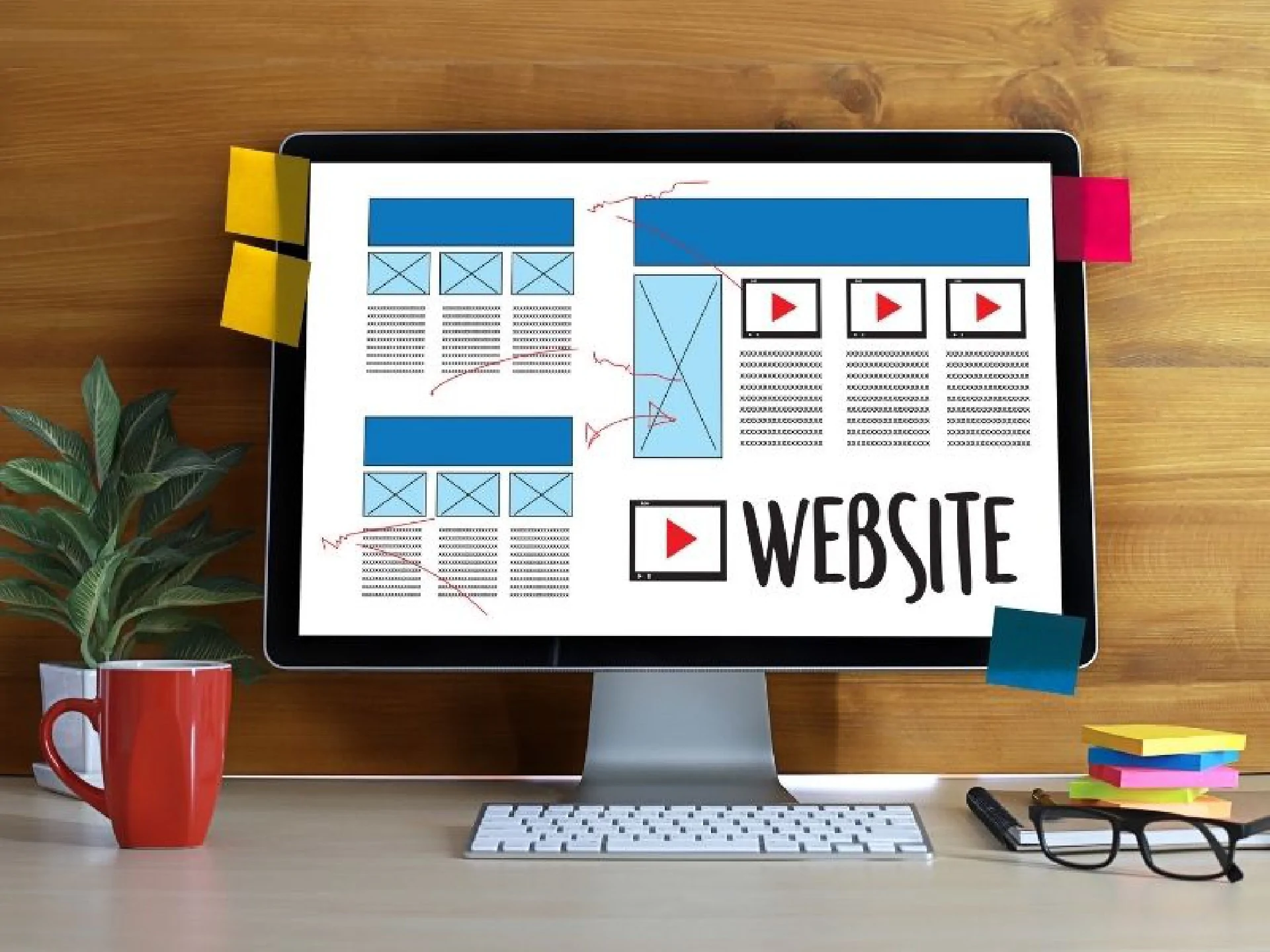
Prototype fidelity should match the question being tested. A simple wireframe can validate navigation and workflow logic. A higher-fidelity prototype is useful when trust, reporting, mobile usability, or complex approvals shape adoption. Building production-grade software to test a basic user journey is usually unnecessary and expensive.
Validate technical feasibility early
A product can have strong market demand and still fail as a business because it cannot integrate reliably, meet security expectations, or operate at the required scale. This is particularly relevant for enterprise software, healthcare systems, financial platforms, and products that depend on third-party APIs.
Perform a technical discovery before promising timelines or fixed functionality. Review the systems that must connect, data ownership, API limits, authentication methods, expected data volumes, privacy obligations, and failure scenarios. A proof of concept should test the hardest technical uncertainty, not the easiest screen to build.
For example, if a product depends on synchronizing ERP data across several customer environments, prove that connectivity and data mapping first. If it uses AI to classify sensitive documents, test output quality, human review workflows, access controls, and auditability before making automation claims. Security and QA are product requirements from the first validation cycle, not final-stage checkboxes.
Put a price on the problem
Interest is not commercial validation. A prospect may acknowledge a problem but lack budget, urgency, or authority to solve it. Ask what the current process costs and what happens if nothing changes for six to twelve months. Then test pricing in the context of a real proposal, pilot agreement, or paid discovery engagement.
The right model depends on the product. A workflow tool with clear operational savings may support subscription pricing. A platform requiring complex implementation and integration may need onboarding fees, usage-based pricing, or a services-led launch. What matters is whether the value created exceeds the total cost of adoption, including training, process change, internal IT effort, and ongoing support.
A paid pilot is one of the strongest validation signals available. It does not need to be a large contract. A modest paid engagement demonstrates that the customer sees enough value to allocate money, stakeholders, and access. Free pilots can still be useful, but they should have a defined scope, executive sponsor, success metrics, and end date. Otherwise, they often become unpaid custom development.
Use Evidence to Make a Go, Pivot, or Stop Decision
Validation produces mixed signals. One enthusiastic customer does not prove product-market fit, while a few skeptical interviews do not automatically mean the idea is weak. The key is to look for patterns across the target segment.
Set decision criteria before reviewing results. A startup may require five qualified pilot conversations and two paid commitments before building an MVP. An enterprise innovation team may require proof that a proposed integration can meet security architecture standards and reduce a process by a defined number of hours. These thresholds should reflect the cost of the next investment.
When evidence is weak, identify exactly what failed. If users describe a real problem but ignore the proposed solution, reposition the value proposition or redesign the workflow. If prospects engage but cannot justify the price, narrow the use case to a higher-value segment or reduce implementation friction. If the economics work but the integration is too costly, reconsider the architecture, target systems, or delivery model.
Stopping is also a valid outcome. Ending a low-potential idea after two weeks of focused research is far better than discovering the same issue after six months of development. Good product teams treat negative evidence as an asset because it redirects resources toward stronger opportunities.
Common Validation Mistakes That Create Expensive Rework
The most costly mistake is building for a broad audience. “Small businesses” and “enterprise teams” are markets, not customer segments. Narrow the first use case by industry, role, workflow, system environment, and urgency. A product that solves one painful process exceptionally well is easier to sell and expand than a platform designed to serve everyone.
Another mistake is treating feature requests as strategy. Customers may ask for dashboards, exports, notifications, and integrations, but those requests do not reveal the core value proposition on their own. Look beneath the feature request. A dashboard may actually signal a need for accountability. An integration request may signal that adoption is impossible without fitting an existing workflow.
Teams also underestimate implementation reality. A promising concept must survive data quality issues, permissions, procurement cycles, cybersecurity reviews, accessibility requirements, and support expectations. Validation should include the people who will approve, integrate, administer, and maintain the product, not only the person who will use it.
The next practical move is simple: select one narrow customer segment, document the highest-risk assumption, and schedule conversations around a real recent problem. Build only enough prototype and technical proof to earn the next commitment. That discipline turns software validation from a brainstorm exercise into a controlled investment decision.